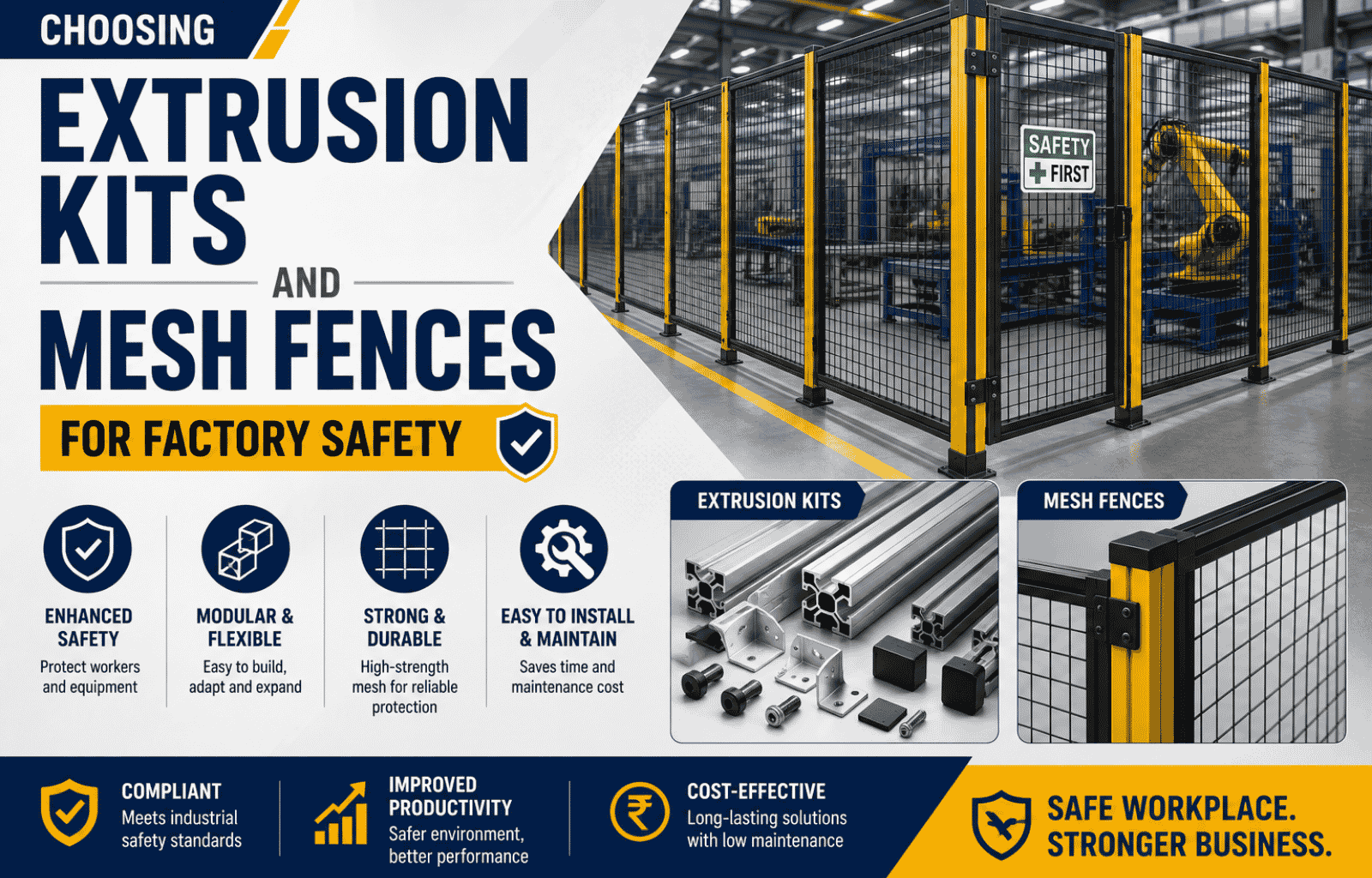
To choose the right extrusion kits and mesh fences for factory safety, focus on material quality, correct sizing, and compliance with safety standards. Pick aluminium extrusion kits for machine guards and framing. Pick galvanised or coated mesh fences for perimeter security and hazard containment. Match each product to your factory's specific risks.
Factory safety is not a one-time task. It is an ongoing responsibility. Every machine, walkway, and storage zone carries some level of risk. When you choose the right safety equipment, you protect your workers, your machines, and your business.
Two products stand out for building a safe factory floor: extrusion kits and mesh fences. Extrusion kits help you frame machine guards, enclosures, and workstations. Mesh fences create clear barriers around hazards and dangerous zones. Together, they form a strong first line of defence.
Featured Products
The stakes are high. According to IndustriALL Global Union, at least 240 workplace accidents took place across India's manufacturing, mining, and energy sectors by December 2024. These accidents caused over 400 deaths and injured more than 550 workers. Many of these incidents could have been reduced with proper barriers and guarding in place.
This guide walks you through everything you need to know. You will learn what these products are, how to choose them, and which mistakes to avoid. By the end, you will feel confident making the right choice for your facility.
What are extrusion kits and how are they used in factories?
Extrusion kits are modular building systems made mostly from aluminium. Manufacturers heat an aluminium billet and push it through a shaped die. This creates long profiles with slots and channels. You then connect these profiles using brackets, fasteners, and fittings.
Think of them as heavy-duty building blocks for industrial use. You can build machine guards, safety enclosures, carts, and workstations. The beauty lies in their flexibility. You cut, join, and reshape them as your needs change.
What types of extrusion profiles are available?
There are several common profile types. Each serves a different purpose on the factory floor.
- Single profiles: These have channels on all four sides. They work well for machine guards, enclosures, carts, and workstations.
- Double, triple, and quad profiles: These offer six to twelve open slots. They suit large structural jobs like beams and posts in big enclosures.
- T-slot extrusions: These remain the most popular choice for industrial automation. The T-shaped slots make it easy to drop in fasteners and accessories.
- Hollow beam and L-shaped profiles: These handle lighter framing and support roles.
Profiles come in metric sizes like 30mm, 40mm, 45mm, and 60mm. They also come in fractional series. You choose the size based on the load and structure you need.
Why do quality extrusion kits improve factory safety?
Quality matters more than most people think. Most structural aluminium extrusions use the 6000 series alloy, such as 6063 T6. This alloy offers moderate strength, easy shaping, and strong corrosion resistance.
Aluminium also has a high strength-to-weight ratio. This means the frames stay strong but remain light enough to handle and reposition. A well-built machine guard keeps hands and tools away from moving parts. That single barrier can prevent a serious injury.
You can explore a full range of framing options in the extrusion kits and mesh fences section at DK Tooling.
What are mesh fences and why do factories need them?
Mesh fences are woven or welded wire barriers. They create clear, see-through boundaries inside and around a factory. The most familiar type is the diamond-pattern chain link fence. But welded mesh panels are also common in industrial guarding.
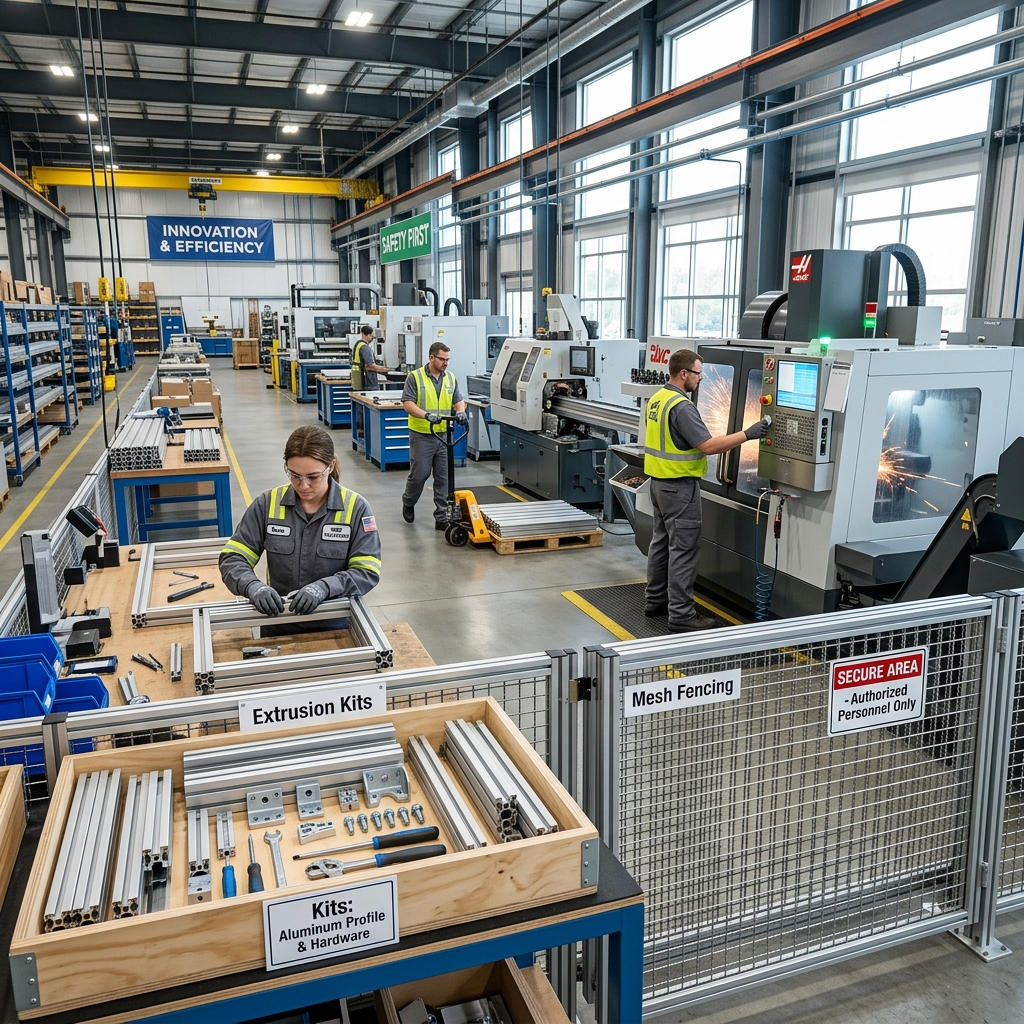
Mesh fences serve one core purpose: they separate people from danger. They keep unauthorised workers out of high-risk zones. They contain hazards like moving equipment, chemical storage, and high-voltage areas. They also mark safe pedestrian paths away from forklift and truck routes.
What materials are mesh fences made from?
The material you choose affects how long the fence lasts. Here are the main options.
- Galvanised steel: This is the most common choice. A zinc coating protects the steel from rust.
- PVC or polymer coated wire: This adds an extra rust barrier. It also allows for colour coding.
- Stainless steel: This suits harsh or corrosive environments where extra durability matters.
Coatings do more than fight rust. They let you colour-code your fences. Safety yellow can mark hazard zones. Green can mark safe areas. Black can blend into the background where needed.
How do mesh fences support safety compliance?
A well-built mesh fence shows regulators that you take safety seriously. It helps during audits and inspections. It also supports a stronger safety culture on the floor.
Clear boundaries send a message. They tell workers that their safety comes first. This can lift morale and sharpen focus. A good fence also protects your machines and stock from theft or damage.
What factors should you consider when choosing extrusion kits?
Choosing the right kit takes more than picking the cheapest option. Weigh these factors carefully.
- Quality and material standard: Look for the 6000 series aluminium alloy. Check for a smooth, clean surface finish.
- Compatibility: Make sure the profiles work with your existing equipment and fittings. Matching slot sizes saves time and money.
- Cost versus long-term value: A cheap kit that fails early costs more in the end. Focus on durability.
- Safety compliance: Choose products that meet recognised safety standards for guarding.
- Ease of installation and maintenance: Modular kits should be simple to build, adjust, and repair.
You may also need supporting parts like aluminium frames and brackets or gussets to complete your structure.
How do you select the right mesh fence for your facility?
Start by studying your factory layout. Walk the floor. Note where hazards sit and where people move. Then match the fence to each risk.
- Mesh size: Smaller openings stop hands, tools, and debris from passing through. A tighter one-inch mesh removes handholds and boosts safety.
- Gauge (wire thickness): Heavier gauges, such as 6 or 9 gauge, resist cutting and impact. Use these for high-security zones.
- Height and top treatment: Taller fences suit serious security needs. Where rules allow, add anti-climb tops for extra protection.
- Weather resistance: For humid, coastal, or chemical-heavy sites, choose coated or stainless options.
- Installation and support: Plan for strong gates, proper footings, and fittings for signs or netting.
Set a clear budget, but think in terms of return on investment. A durable fence reduces accidents, insurance costs, and downtime.
Extrusion kits vs mesh fences: which do you need?
Both products serve safety goals, but in different ways. This table shows how they compare.
| Feature | Extrusion Kits | Mesh Fences |
|---|---|---|
| Main material | Aluminium (6000 series alloy) | Galvanised, coated, or stainless steel |
| Best use | Machine guards, enclosures, workstations | Perimeter security, hazard containment |
| Key strength | High strength-to-weight ratio | Cut and impact resistance |
| Flexibility | Highly modular, easy to reshape | Fixed panels or rolls |
| Corrosion resistance | Strong, especially anodised | Depends on coating |
| Ideal for | Framing moving machinery safely | Separating people from danger zones |
In most factories, you need both. Use extrusion kits to guard individual machines. Use mesh fences to control access and mark zones. Choose extrusion kits if flexible, precise framing matters more. Choose mesh fences if perimeter control and containment come first.
What are the most common mistakes to avoid?
Even experienced buyers slip up. Watch out for these errors.
- Buying on price alone: A low price often means low quality. Weak materials fail fast and put workers at risk.
- Ignoring safety standards: Skipping compliance can lead to fines, failed audits, and accidents.
- Overlooking maintenance: Every barrier needs upkeep. Rust, dents, and loose fittings weaken protection over time.
- Poor installation: A badly fitted guard or fence gives false security. Follow correct methods or use professional support.
What are the best practices for factory safety implementation?
Choosing good products is only the first step. How you use them matters just as much.
- Build a clear safety plan. Map out every hazard. Assign the right barrier to each one.
- Schedule regular inspections. Check for rust, damage, and loose parts. Fix issues early.
- Train your workers. Show them how guards and fences protect them. Explain why they must stay in place.
- Stay updated on regulations. Safety rules change. Keep your setup in line with the latest standards.
A safe factory runs smoother. Fewer accidents mean less downtime and lower costs. Over time, safety pays for itself.
For more buying guidance, you can read the ultimate guide to industrial tools or browse the full framing and support range.
Protect your workforce with the right safety equipment
The right extrusion kits and mesh fences do more than tick a box. They protect the people who keep your factory running. They guard machines, contain hazards, and prove your commitment to safety.
Start by studying your factory's real risks. Match each risk to the right product. Focus on quality, correct sizing, and compliance over the lowest price. Then keep everything well maintained.
DK Tooling supplies quality extrusion kits, mesh fences, and framing components across Delhi NCR, Noida, Greater Noida, and Gurugram. For expert advice tailored to your facility, request a quote or get in touch with the team today.
Frequently asked questions
What is the main difference between extrusion kits and mesh fences?
Extrusion kits are aluminium framing systems used to build machine guards, enclosures, and workstations. Mesh fences are wire barriers used for perimeter security and hazard containment. Extrusion kits offer flexible, modular framing. Mesh fences offer strong, fixed barriers around danger zones.
Which aluminium alloy is best for extrusion kits?
The 6000 series alloy, such as 6063 T6, is the most common choice for structural extrusion kits. It offers moderate strength, easy shaping, and strong corrosion resistance. It also has a high strength-to-weight ratio, which keeps frames strong yet light.
What gauge and mesh size should I choose for a factory fence?
For high-security zones, choose a heavier 6 or 9 gauge wire, since it resists cutting and impact. Choose a smaller mesh size, such as one inch, when you need to block hands, tools, and debris. Tighter mesh also removes handholds, which improves safety.
How do mesh fences help with safety compliance?
Mesh fences create clear, visible boundaries around hazards. This helps you pass safety audits and shows regulators you take safety seriously. Well-maintained fences also support a stronger safety culture by signalling that worker safety is a priority.
Do I need both extrusion kits and mesh fences in my factory?
Most factories benefit from both. Use extrusion kits to guard individual machines and build enclosures. Use mesh fences to control access and separate people from danger zones. Together, they cover both close-up guarding and wider perimeter safety.
Where can I buy quality extrusion kits and mesh fences in Delhi NCR?
DK Tooling supplies extrusion kits, mesh fences, and framing components across Delhi NCR, Noida, Greater Noida, and Gurugram. You can browse the extrusion kits and mesh fences range online or request a custom quote for bulk orders.