Electric discharge jigs are precision fixtures that hold a workpiece steady inside an EDM machine so electrical sparks can shape hard metal with micron accuracy. Taperless core pins are straight-shaft mould pins that drop into a straight bore — cutting machining time, replacement labour, and spare-parts stock, especially in high-cavity moulds.
Most people think precision comes from the cutting tool. It doesn't — not entirely. A lot of it comes from how firmly the work is held and how cleverly the smaller components are designed.
That's where electric discharge jigs and taperless core pins earn their place. Both sit quietly inside the manufacturing process. Neither gets much attention. Yet both decide whether a finished part measures right or lands in the scrap bin.
Featured Products

This guide breaks down what these tools are, how they work, and why they can save you real time and money. No heavy jargon. Just plain explanations you can act on.
What Are Electric Discharge Jigs?
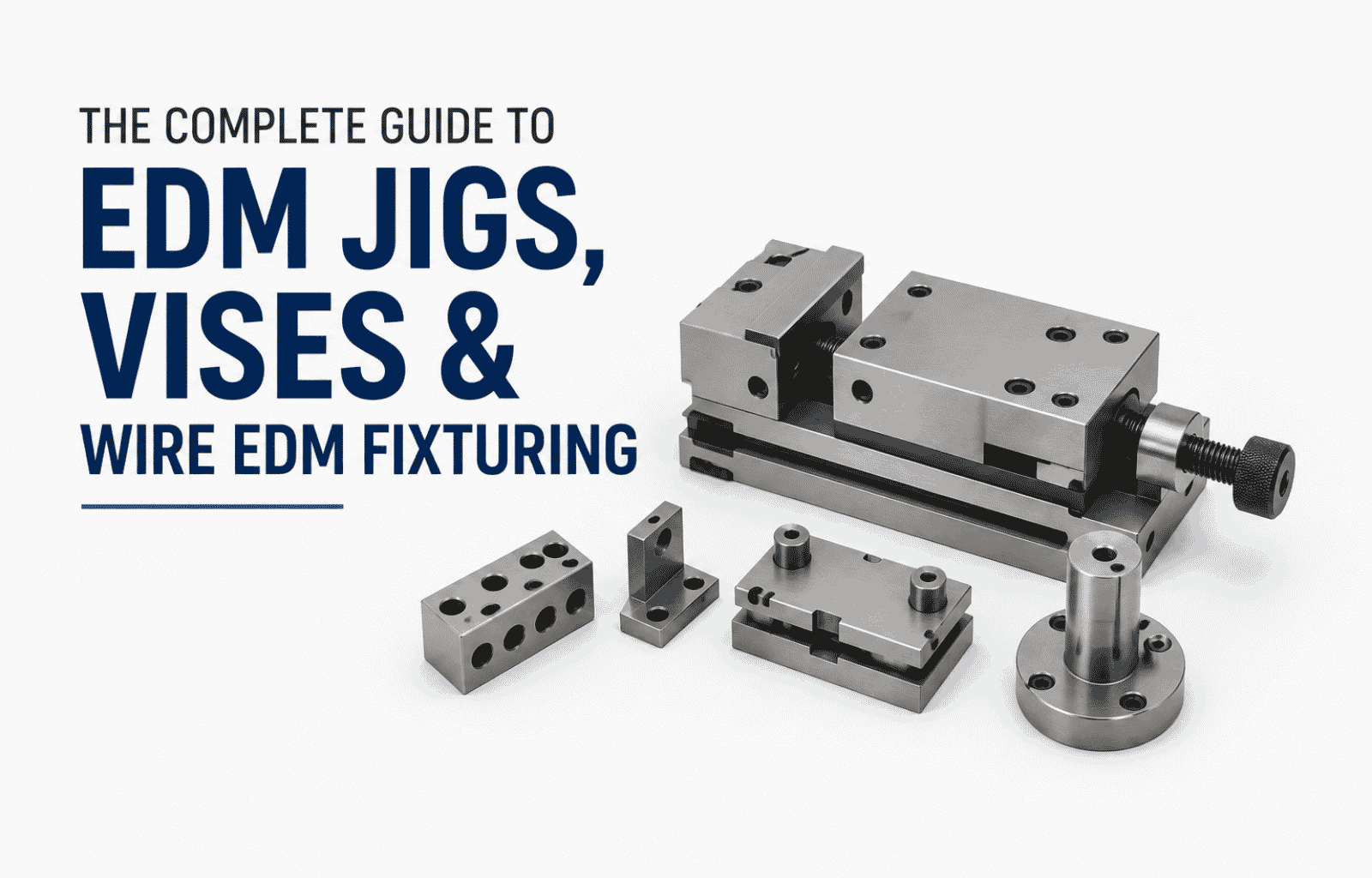
An electric discharge jig is a fixture. Its job is simple — hold the workpiece in exactly the right position while an EDM machine does its work.
EDM stands for Electrical Discharge Machining. Instead of cutting metal with a blade, it removes metal using controlled electrical sparks. Each spark melts and vaporises a tiny bit of material. The plasma channel from these sparks can reach temperatures between 8,000°C and 12,000°C, according to Ho & Newman (2003). That heat does the shaping — no physical cutting force needed.
Because there's no cutting force, the workpiece can't be allowed to shift even slightly. A jig locks it in place. Then it does the same thing again for the next part, and the next. That repeatability is the whole point.
How does an EDM jig actually work?
Think of the jig as a repeatable reference point. You clamp the workpiece once, set your coordinates, and the machine knows exactly where the material sits relative to the electrode or wire.
- Sinker EDM uses a shaped electrode pressed into the work to sink a cavity. The jig keeps the alignment true.
- Wire EDM runs a thin wire through the material along a programmed path. The jig holds the plate so the cut stays clean.
- Drill EDM makes deep, narrow holes. The jig keeps the angle exact.
Modern EDM machines hit accuracies of roughly ±1 to ±5 microns. A poorly held workpiece throws that away. A good jig protects it.
Where are EDM jigs used?
You'll find them anywhere hard metal meets tight tolerances. Injection mould cavities. Die-casting moulds. Stamping dies. Turbine parts. Surgical tools and implants. In each case, the part is too hard, too detailed, or too delicate for conventional cutting — and the jig makes sure every piece comes out the same.
Understanding Taperless Core Pins
Now to the second tool. A core pin creates holes, bores, and internal features inside a moulded or cast part. Most core pins have a tapered shaft — a slight cone shape — so they wedge into a matching tapered bore.
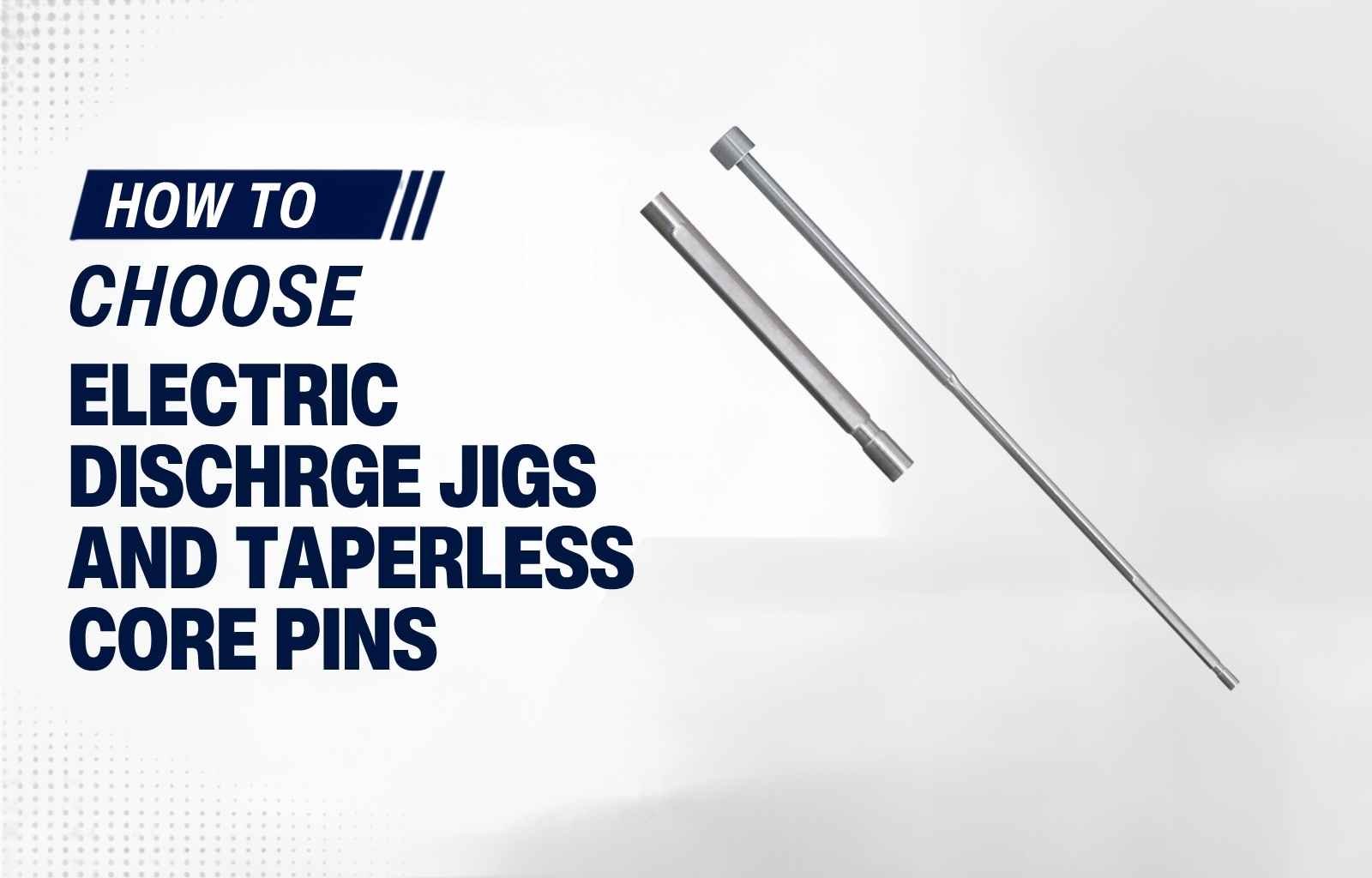
Taperless core pins do it differently. They have a straight shaft that drops into a straight bore. No cone. No wedge. Just a clean, repeatable fit.
That small change carries a big effect.
What makes taperless pins different from taper pins?
A taper pin has to match the exact angle of its bore. Get the angle wrong and the pin seats badly. Every plate bore needs a secondary reaming step to cut that taper, which adds time and cost.
A taperless pin skips all of that. The bore only needs a straight drill and ream — the operation you were doing anyway. The pin then drops in. That's it.
Which industries rely on taperless core pins?
They shine in high-cavity injection moulding — think 16 cavities and up, where the same pin design repeats dozens of times. Plastics, automotive components, and consumer goods manufacturers all lean on them. The more cavities you run, the more the savings stack up.
Key Advantages You Should Know About
Both tools share a common thread: they make precision cheaper and more repeatable. Here's how that plays out.
Better precision and accuracy
EDM jigs protect the micron-level accuracy an EDM machine is capable of. Taperless pins remove the guesswork of matching taper angles, so every pin seats the same way. Fewer variables → fewer surprises.
Real cost savings over time
This is where taperless pins get interesting. According to a cost analysis by Axiom Molds, taperless core pins can cut the total cost of ownership by 20–35% in high-cavity moulds. On a 64-cavity mould, eliminating taper reaming saved roughly 12.8 hours of machining — about $1,024 at an $80/hour shop rate.
The pins themselves cost about the same. The savings come from everything around them.
Faster setup and easier maintenance
Replacing a taper pin means aligning it carefully with the tapered bore — roughly 8 to 12 minutes per pin. A taperless pin just drops in and locks — around 3 to 5 minutes. Across 64 cavities, that's over five hours saved per replacement event.
There's a stock benefit too. One taperless pin of a given diameter fits any straight bore of that diameter. That can trim spare-parts inventory by 20–40%, since you no longer stock multiple taper angles.
Less waste, better results
A firmly held workpiece and a well-seated pin both reduce scrap. ScienceDirect's mould maintenance reference notes that standardising on taperless retention can lower total maintenance downtime by 15–25% compared with traditional taper systems. Less downtime means fewer rejected parts and steadier output.
How to Choose the Right Equipment for Your Needs
Not every job needs the same setup. A few honest questions save you from buying the wrong thing.
Questions to ask before you buy
- How many cavities does the mould run? High-cavity moulds favour taperless pins. For 1–4 cavities, the savings shrink and taper pins may still make sense.
- What material am I machining? EDM only works on electrically conductive metals. Plastics, ceramics, and glass won't spark unless coated.
- How tight are my tolerances? The tighter the spec, the more your jig and fixture quality matter.
- Do my existing moulds already have taper bores? If so, converting them to straight bores is expensive — and taper pins may be the smarter choice for that tool.
Common mistakes to avoid
The biggest one is treating the jig as an afterthought. A machine rated to ±2 microns means nothing if the fixture lets the part drift. The second is assuming taperless always wins. It usually does in high-cavity work — but not when lateral loads are extreme or the bores are already tapered.
Tips for getting the best value
Buy from a supplier who stocks quality precision tooling and can advise on fit. You can browse a full range of industrial and precision tools at DK Tooling, or reach the team directly through the contact page to talk through your specification.
Practical Tips for Getting Started
A few habits keep both tools working well.
- Clamp once, check twice. Verify your reference point before you start the cut. A minute now saves a scrapped part later.
- Keep the dielectric clean. EDM runs in a fluid that flushes away debris. Dirty fluid means unstable sparks and rough finishes.
- Match the pin to the bore, not the habit. If you're moving to taperless, confirm the bore is a true straight ream first.
- Inspect on a schedule. Check pin seating and jig alignment during routine maintenance, not after a defect shows up.
Troubleshooting is usually about going back to basics. Rough surface finish? Lower the discharge energy on finishing passes. Pin seating poorly? Check the bore, not just the pin. Most problems trace back to setup, not the tool itself.
For a wider view on choosing dependable tooling, DK Tooling's guide on selecting industrial engineering supplies is a useful read, as is their piece on choosing a machinery parts supplier that minimises downtime.
Where This Leaves You
Electric discharge jigs and taperless core pins won't win any awards for glamour. They're the quiet parts of a precise process. But the numbers speak plainly — less machining time, lower replacement labour, smaller spare-parts stock, and steadier accuracy.
The right choice always depends on your job. High-cavity moulds and hard-metal cavities lean towards taperless pins and solid EDM fixturing. Older tooling with taper bores may not. Start by asking what your parts actually demand — then match the tool to the answer.
If you're weighing up an upgrade, the sensible next step is to compare your current setup against your cavity count and tolerance targets, and talk to a supplier who knows precision tooling well.
Frequently Asked Questions
What is an electric discharge jig used for?
An electric discharge jig holds a workpiece firmly and accurately inside an EDM machine. It keeps alignment true during machining, so every part comes out with the same micron-level accuracy — important in mould making, die making, and aerospace work.
Are taperless core pins better than taper core pins?
For high-cavity moulds (16 cavities and up), usually yes. Taperless pins cut plate machining time, speed up replacement, and reduce spare stock. Taper pins can still be the better pick when bores are already tapered or when the pin faces extreme lateral loads.
How much can taperless core pins save?
Axiom Molds reports total cost-of-ownership savings of 20–35% in high-cavity moulds. On a 64-cavity mould, one analysis showed around 12.8 hours of machining time saved — roughly $1,024 at an $80/hour shop rate — plus lower replacement labour and inventory.
What materials can EDM machine?
EDM works on any electrically conductive material — tool steels, mould steels, stainless steel, titanium, and superalloys. It can't machine non-conductive materials like plastics, ceramics, or glass unless they carry a conductive coating.
Do I always need a jig for EDM work?
For repeatable, accurate results — especially in batch production — yes. A jig gives you a fixed reference point so each part sits identically. Without it, the machine's precision is wasted on parts that shift out of position.