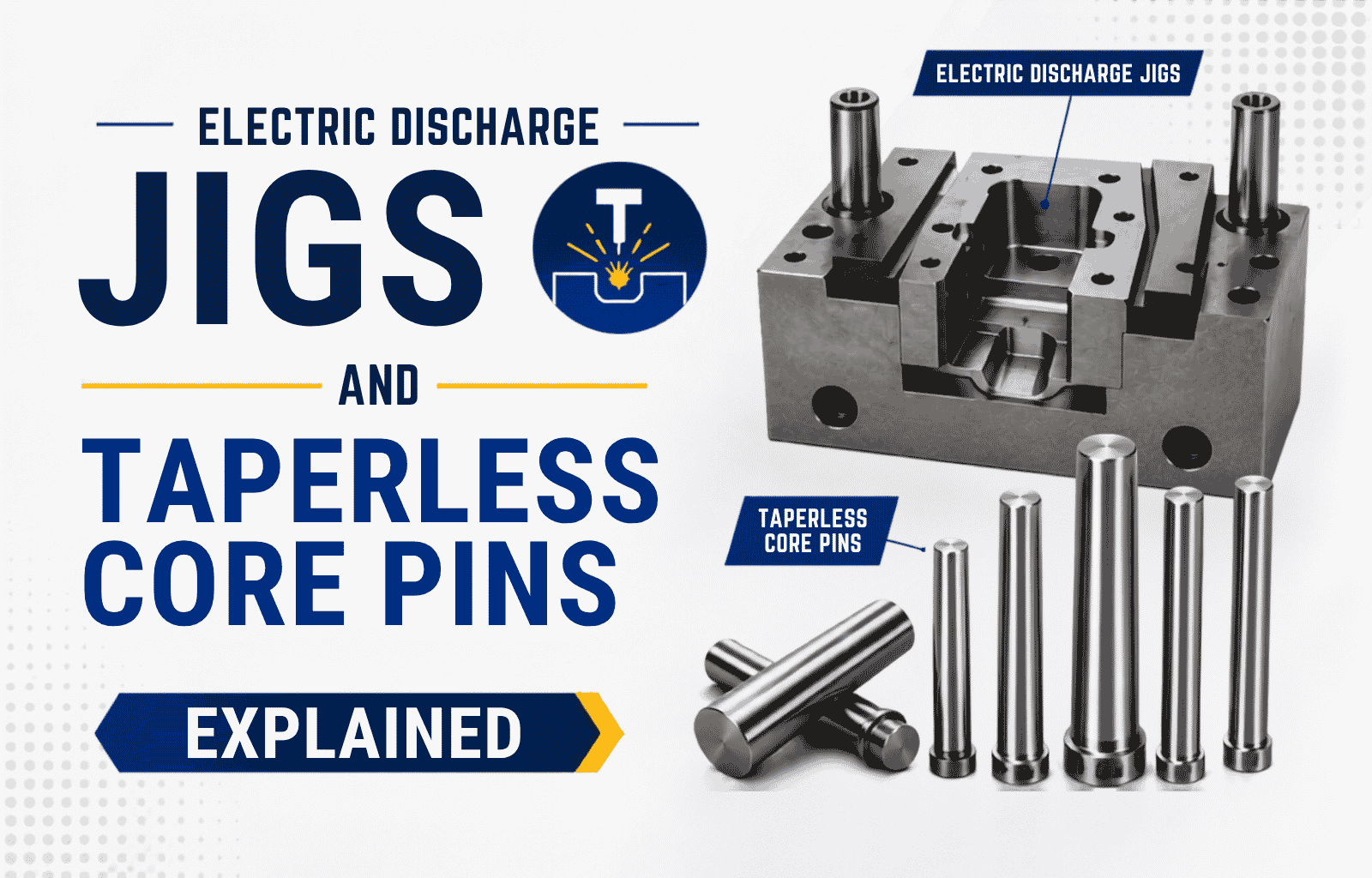
Quick answer: An electric discharge jig is a fixture that holds a workpiece in the exact right spot while an EDM machine shapes it. A taperless core pin is a straight mould pin with no draft angle, used to form precise holes and features in plastic parts. Together, they help manufacturers make accurate, repeatable moulds with less waste.
Modern moulding runs on precision. A gap of even a fraction of a millimetre can ruin a batch of parts. That is where electric discharge jigs and taperless core pins come in. Both tools do quiet, important work behind the scenes.
This guide explains what they are and how they work. It covers their benefits, real uses, and how to pick the right ones. The language is kept simple, so anyone new to moulding can follow along. By the end, you will know why these tools matter and what to do next.
Featured Products
What are electric discharge jigs?
An electric discharge jig is a fixture. Its job is simple. It holds the workpiece in exactly the right position while an EDM machine does its work.
EDM stands for Electrical Discharge Machining. This process uses electric sparks to cut metal. The sparks remove tiny bits of material at a time. This lets machines cut hard metals and shapes that normal cutting tools cannot handle.
The jig keeps the part still and steady during this process. If the part moves, the cut goes wrong. A good jig stops that from happening.
How electric discharge jigs work in moulding
There are two main types of EDM. Each one uses a different kind of jig.
- Wire EDM: This uses a thin wire to cut. It is great for precise inserts, core and cavity separation, and high-accuracy contour cutting.
- Sinker EDM: This uses a shaped electrode. It is used for deep cavity formation, complex internal features, and intricate surface details.
The jig holds the workpiece firm during both types. This gives clean cuts and sharp corners every time.
Key advantages over traditional methods
Normal machining struggles with hard steel and tiny details. EDM does not. With the right jig, you get sharp internal corners, deep ribs, and fine features. You also get better repeat accuracy, which matters in large production runs.
Understanding taperless core pins
A core pin is a small part fixed inside a mould. It creates a shape, hole, or hollow in the finished plastic part. Most core pins have a slight taper, or draft angle. This makes the part easier to eject.
A taperless core pin is different. It has no taper along its length. The sides stay straight from top to bottom. This lets it form precise, straight holes with even walls.
What makes taperless core pins different
The main difference is the straight design. A tapered pin gets slightly wider or narrower along its length. A taperless pin stays the same width throughout.
This matters when a part needs an exact hole size. A straight hole with even walls is often needed in tight-tolerance work. A taperless pin delivers that.
Benefits of using taperless core pins
- Better accuracy: Straight walls mean tighter tolerances.
- Consistent holes: Every part comes out the same.
- Cleaner fits: Parts that must join together fit better.
- Less rework: Fewer errors mean less time fixing parts.
DK Tooling offers several core pin types to suit different jobs. These include taperless core pins, straight core pins, steps-type round core pins, and pins for boss, round shank, and inlay work. Each type solves a different moulding need.
Common applications in manufacturing
Taperless core pins are used wherever precise holes matter. Think of tall, thin cores that would be too fragile if cut from the mould itself. Core pins fill this gap well. They are common in automotive, electronics, and medical parts.
How electric discharge jigs and taperless core pins work together
These two tools support each other in the moulding workflow. EDM jigs help build and shape the mould itself. Taperless core pins then work inside that mould to form each part.
EDM machines often cut the exact slots and holes where core pins sit. A precise jig makes sure these seats are accurate. When the seat is right, the core pin fits perfectly. This link between the two tools drives quality.
Improved precision and accuracy
A precise mould needs precise parts. EDM jigs give sharp, accurate cuts. Taperless pins add exact holes to the moulded product. Together, they raise the overall accuracy of the finished part.
Reduced production time and waste
Accurate tooling means fewer bad parts. Fewer bad parts mean less scrap and less rework. This saves both time and material. Over a long run, these savings add up fast.
Advantages for manufacturers
Investing in quality EDM jigs and taperless core pins brings clear returns. Here are the main gains.
- Cost savings: Less scrap and rework lowers your total cost. Better tooling life also cuts replacement spend.
- Higher quality: Parts come out sharp, clean, and consistent.
- More capacity: Reliable tools reduce downtime. This lets you make more parts in the same time.
- Lower maintenance: Well-made pins and jigs last longer and need less attention.
Industry applications and use cases
Electric discharge jigs and taperless core pins show up across many industries. Here is where they do the most good.
Automotive moulding
Car parts need to be strong and exact. Connectors, clips, and housings all rely on precise holes. Taperless core pins form these features. EDM jigs help make the tough moulds that produce them at scale.
Consumer goods manufacturing
Everyday plastic items need clean, repeatable shapes. From bottle caps to appliance parts, consistency matters. These tools keep every unit the same.
Electronics and precision components
Electronic parts are small and detailed. They often need tiny, exact holes for pins and screws. Taperless core pins are ideal here. EDM handles the fine features that normal tools cannot cut.
Medical device production
Medical parts must meet strict standards. A pin that is off by a fraction can fail an inspection. Taperless core pins give the tight tolerances this field demands. EDM jigs support the fine, complex mould work behind them.
How do you choose the right equipment for your needs?
Picking the right tools takes some thought. A few key factors will guide your choice.
- Production volume: High-volume runs need durable, high-hardness tooling.
- Part tolerance: Tight-tolerance parts need taperless pins and precise jigs.
- Material type: Some plastics are "stickier" and need different pin sizes or counts.
- Supplier quality: A trusted supplier gives consistent products and support.
Assess your own needs first. Then match the tools to the job. It also helps to compare suppliers on quality, range, and delivery. Marketplaces like IndiaMART and TradeIndia list many EDM and mould part sellers. Comparing them helps you judge value and reliability.
For industrial tools, fasteners, and related supplies, you can also explore the range at DK Tooling's online store. A single trusted source can simplify your whole supply chain.
Best practices for implementation
Good tools still need good handling. Follow these steps to get the most from them.
- Set up carefully: Align jigs correctly before the first cut. A small error early can spoil the whole run.
- Train your operators: Make sure staff know how each tool works. Trained hands make fewer mistakes.
- Maintain often: Clean and check pins and jigs on a set schedule. This keeps them accurate and extends their life.
- Store well: Keep spare pins safe from damage and rust.
Common challenges and solutions
Even with the best tools, problems can appear. Here is how to handle a few common ones.
- Worn pins: Over time, pins wear down. Replace them before quality drops.
- Poor fit: If a pin does not seat well, check the mould seat and the jig alignment.
- Sticking parts: Some resins grip the mould. Adjust pin size or count to spread the force.
Knowing when to upgrade is key. If your scrap rate climbs or tolerances slip, it may be time for new tooling. Working with a reliable supplier makes this switch smooth. You can review the full core pins range to find the right fit.
Future trends in moulding technology
Moulding keeps changing. A few trends are shaping its future.
- Smarter EDM: New machines cut faster and more precisely. This raises quality across the board.
- Automation: Industry 4.0 tools link machines and data. This means less manual work and fewer errors.
- Sustainability: Less scrap and longer tool life help cut waste. Efficient tooling supports greener production.
Manufacturers who adopt these trends early will stay ahead. Precision tooling sits at the heart of this shift.
Final thoughts on precision moulding tools
Electric discharge jigs and taperless core pins may be small parts of a big process. Yet they carry a lot of weight. Jigs hold your work steady for clean EDM cuts. Taperless pins form the exact holes your parts need.
Together, they raise quality, cut waste, and save money. That is a strong return for tools that often go unnoticed.
If you plan to upgrade, start by reviewing your current tolerances and scrap rates. Then choose quality tooling from a trusted supplier. Small changes here can lift your whole operation.
Frequently asked questions
What is an electric discharge jig used for?
An electric discharge jig holds a workpiece in place during EDM machining. It keeps the part steady so the machine can cut precise shapes, sharp corners, and fine details in hard metal.
What is the difference between a tapered and a taperless core pin?
A tapered core pin gets slightly wider or narrower along its length. A taperless core pin stays the same width throughout. Taperless pins form straight holes with even walls, which suits tight-tolerance work.
Which industries use taperless core pins the most?
Automotive, electronics, medical device, and consumer goods makers use them often. Any product that needs precise, repeatable holes can benefit from taperless core pins.
Are electric discharge jigs worth the cost?
Yes, for precision work. They reduce scrap, improve accuracy, and boost repeatability. Over a long production run, the savings in material and rework often outweigh the upfront cost.
How do I choose a reliable core pin supplier?
Look at product range, quality standards, and delivery. Compare a few sellers, including those on IndiaMART and TradeIndia. A trusted supplier like DK Tooling offers a wide core pin range and support across many regions.