
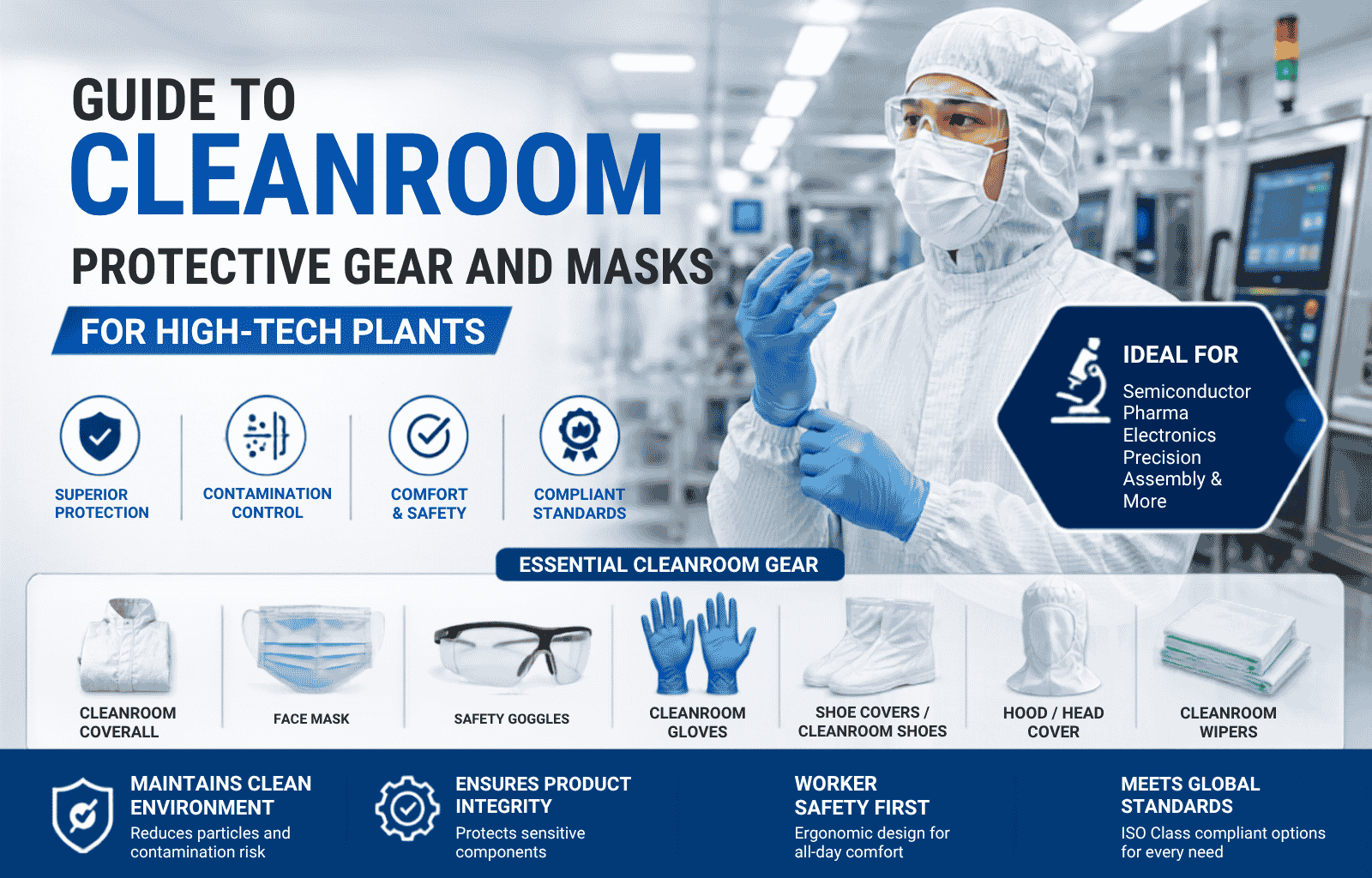
Modern manufacturing is becoming cleaner, faster, and more precise with each passing year. Advanced industries such as semiconductor fabrication, pharmaceutical sterile packaging, medical device assembly, aerospace optics, and high-precision electronic manufacturing cannot tolerate dust or airborne contaminants. In these ultra-clean environments, a single stray particle of dust, a microscopic skin flake, or an eyelash can destroy an entire batch of silicon wafers, short-circuit printed circuits, or contaminate sterile injectable medicines.
Cleanrooms are specially constructed enclosed spaces. They tightly regulate the concentration of airborne particles, ambient temperature, humidity levels, and differential air pressure. Powerful high-efficiency particulate air (HEPA) and ultra-low particulate air (ULPA) filtration systems constantly scrub the room air to eliminate microscopic debris as small as 0.1 microns.
However, the single largest source of contamination inside any operational cleanroom is human personnel. Human skin naturally sheds roughly 30,000 to 40,000 dead cells every single minute. Normal breathing, speaking, and coughing release thousands of microscopic liquid aerosols. Standard walking movements generate friction and electrostatic charges, which attract and disperse fine airborne dust.
Featured Products


This is why cleanroom protective gear and specialised face masks are indispensable. Cleanroom apparel acts as a continuous biological and particulate containment barrier. In this comprehensive guide, we will examine how to select the right cleanroom masks, coveralls, gloves, footwear, and anti-static accessories to keep your high-tech production lines fully compliant, safe, and productive.
Understanding Cleanroom ISO Classes and International Standards
Before purchasing protective apparel, factory managers must clearly understand their facility's cleanroom classification. The International Organisation for Standardisation (ISO) establishes strict global guidelines under the ISO 14644-1 standard. This framework categorises cleanroom environments from ISO Class 1 (the cleanest conceivable environment) down to ISO Class 9 (standard unconditioned room air).
Overview of Common Cleanroom Classifications in Manufacturing
- ISO Class 1 to Class 3: Ultra-clean environments used for semiconductor silicon wafer fabrication, micro-electromechanical systems (MEMS), and nanotechnology research. Strict full-body containment suits with positive pressure breathing systems and continuous air extraction are mandatory.
- ISO Class 4 and Class 5 (Federal Standard 209E Class 100 Equivalent): Widely used in pharmaceutical sterile filling suites, micro-electronic component assembly, and optical laser manufacturing. Requires continuous filament lint-free hooded coveralls, high-filtration face masks, protective goggles, and sterile double-layer nitrile gloves.
- ISO Class 6 and Class 7 (Class 1,000 to 10,000 Equivalent): Common in precision medical device assembly, automotive sensor cleanrooms, and aerospace hydraulic component production. Requires cleanroom lab coats or two-piece suit sets, anti-static masks, bouffant caps, and conductive cleanroom shoe covers.
- ISO Class 8 (Class 100,000 Equivalent): Used for general electronic packaging, plastic injection cleanroom moulding, and pharmaceutical dry powder processing. Basic cleanroom gowns, disposable three-ply non-shedding masks, and powder-free gloves are standard.
Essential Cleanroom Protective Gear and Apparel
Outfitting a cleanroom workforce requires a comprehensive, layered approach. Every single piece of apparel must work together to seal in human contaminants while allowing the worker to breathe comfortably and move freely throughout an eight-hour shift.
1. High-Filtration Cleanroom Face Masks
Standard three-ply surgical masks used in everyday medical clinics are completely unsuitable for high-grade cleanrooms. Common surgical masks are made from staple paper fibres that shed microscopic lint when the wearer speaks. True cleanroom masks are manufactured exclusively from 100% continuous filament polypropylene or polyethylene meltblown microfibres.
They feature ultrasonically welded seams instead of traditional stitched needle threads, completely eliminating fibre release. These masks provide two-way filtration with Bacterial Filtration Efficiency (BFE) and Particle Filtration Efficiency (PFE) exceeding 99% at 0.1 microns. They capture saliva aerosols, skin flakes, and exhaled moisture droplets while providing low breathing resistance for maximum worker comfort.
2. Cleanroom Coveralls and Gowns (Bunny Suits)
Cleanroom coveralls (often referred to in the industry as bunny suits) envelope the wearer from neck to ankles. They are woven from continuous high-density filament polyester yarns embedded with a permanent 5mm or 2.5mm carbon conductive grid. This conductive grid continuously dissipates electrostatic discharge (ESD) safely before static charges can damage delicate electronic semiconductor components.
For ISO Class 5 and cleaner facilities, coveralls feature integrated hoods, elasticated facial openings, raglan sleeves for unrestricted arm movement, and tunnelled elastic ankles. Front zips are shielded behind double-layer protective storm flaps to prevent internal clothing lint from escaping through the zip teeth.
3. Powder-Free Cleanroom Nitrile Gloves
Gloves represent the primary point of direct physical contact with high-value workpieces and tools. Standard powdered latex gloves must never enter a cleanroom because the cornstarch powder acts as an aggressive airborne contaminant that ruins electronic components and optic coatings.
Cleanroom gloves are moulded from high-purity synthetic nitrile polymers. They undergo extensive multi-stage washing cycles in deionised (DI) water inside cleanroom packaging facilities. They provide ultra-low ionic extractable levels, zero chemical powder residue, textured finger grips for handling delicate tweezers, and superior puncture resistance against sharp metal tool edges.
4. Anti-Static Cleanroom Footwear and Conductive Overshoes
As operators walk across cleanroom epoxy or vinyl flooring, standard rubber soles generate high static voltage through triboelectric charging. Cleanroom safety shoes feature static-dissipative polyurethane soles. When paired with conductive ESD floor mats, these shoes safely drain static electricity away from the human body and into the building earthing system.
For visitors and lower-tier cleanroom suites, non-woven polypropylene shoe covers with non-skid rubberised grip treads prevent outside soil, street dirt, and road dust from crossing cleanroom thresholds.
Key Material Comparison for Cleanroom Apparel
Selecting the proper fabric construction determines filtration performance, electrostatic safety, and operator endurance. Here is a helpful engineering comparison of standard cleanroom apparel materials:
| Material Construction | Filtration Efficiency | ESD Protection Level | Typical Cleanroom Application |
|---|---|---|---|
| Spunbond-Meltblown-Spunbond (SMS) Polypropylene | High (BFE > 98%) | Basic / Anti-Static Topical Treatment | Disposable masks, ISO Class 7/8 visitor gowns, lab coats |
| Continuous Filament Polyester with Carbon Grid | Very High (99.9% at 0.3μm) | Excellent (Surface Resistivity 10^6 to 10^8 ohms) | Reusable laundered coveralls, ISO Class 4/5 bunny suits |
| Microporous Film Polyethylene Laminate | Complete liquid & aerosol barrier | Moderate Dissipative | Chemical splash protection, pharmaceutical liquid compounding |
| DI-Washed Powder-Free Cleanroom Nitrile | Impermeable barrier | Naturally Static Dissipative | Wafer handling, precision tool assembly, PCB testing |
Correct Gowning Procedures: Step-by-Step Protocol
Having the finest protective apparel will not keep your cleanroom compliant if operators fail to follow strict gowning procedures. Gowning must always proceed in a strict top-down sequence inside the dedicated gowning airlock room:
- Step onto the Tacky Mat: Before crossing into the gowning room, step firmly on multi-layer sticky adhesive floor mats to strip loose soil from the soles of your shoes.
- Put on the Bouffant Cap: Tuck all head hair, sideburns, and ears securely inside the lint-free cap. For operators with facial hair, put on a cleanroom beard cover.
- Put on the Cleanroom Face Mask: Position the mask over your mouth and nose. Bend the flexible aluminium nose bridge strip firmly across your nose to create a tight, gap-free seal along your cheeks.
- Put on Cleanroom Safety Goggles: Position anti-fog protective eyewear over your eyes to capture eyelash shedding and protect against chemical splashes.
- Put on the Cleanroom Coverall: Unfold the suit carefully without allowing the arms or legs to brush against the floor. Step into the legs, pull the suit up over your torso, and zip the front completely to the throat.
- Put on Cleanroom Boots or Conductive Overshoes: Tuck the coverall pant legs securely inside the high-top cleanroom boots. Fasten all leg snaps.
- Put on Cleanroom Nitrile Gloves: Pull the glove cuffs up over the elasticated sleeves of the coverall to create a continuous particle-tight seal. Sanitise your gloved hands with a 70% Isopropyl Alcohol (IPA) spray before crossing the clean boundary bench.
Following this discipline ensures that human contaminants are completely contained inside the suit before entering the primary manufacturing zone. If your facility also requires precision workshop equipment and setup accessories, explore our extensive range of workshop tooling and industrial accessories.
Common Cleanroom Mistakes and How to Avoid Them
Even in certified ISO manufacturing facilities, small oversights can lead to costly batch rejections. Watch out for these four common mistakes:
- Touching the Outer Mask Surface with Gloves: Operators frequently adjust their face mask using gloved hands. This action transfers saliva droplets and facial oils to the glove surface, which then contaminates the next precision part they assemble.
- Wearing Cosmetics, Colognes, and Body Powders: Makeup, face powders, nail varnish, and perfumes shed massive volumes of airborne chemicals and microscopic minerals. High-tech cleanrooms must enforce a strict zero-cosmetics policy.
- Rapid Physical Gestures and Rushing: Walking quickly or moving arms rapidly inside a cleanroom creates localized air turbulence. Turbulence stirs up settled particles from floors and tables. Cleanroom workers must maintain calm, deliberate movements at all times.
- Reusing Single-Use Disposable Apparel: Disposable polypropylene masks and nitrile gloves lose their electrostatic filtration charge and develop microscopic pinholes over time. Never allow single-use consumables to be worn across multiple shifts.
Why Quality Tooling and Cleanroom Sourcing Matters
The high-tech manufacturing sector across India is expanding at an extraordinary pace. Modern cleanroom facilities in industrial centres like Noida, Bengaluru, Hyderabad, Chennai, and Pune are producing global-standard electronics, pharmaceuticals, and precision aerospace components.
Having a dependable supplier who understands industrial cleanliness and tooling specifications is essential. Sourcing durable, certified cleanroom consumables and precision workshop equipment ensures you pass your regular ISO quality audits without stress.
At DK Tooling, we are dedicated to providing industrial manufacturing plants with certified industrial tools, measuring instruments, and factory accessories engineered for demanding cleanroom and workshop environments.
Conclusion
Cleanroom protective gear and masks are far more than ordinary personal protective equipment (PPE). They are precision contamination control tools that directly protect your production yields, prevent costly batch rejections, and maintain your international manufacturing certifications.
By understanding your cleanroom ISO requirements, investing in lint-free anti-static fabrics, and enforcing rigorous gowning protocols, you can ensure that your high-tech manufacturing plant runs at peak efficiency. Audit your current cleanroom safety supplies today and equip your team with the protective gear they need to succeed.