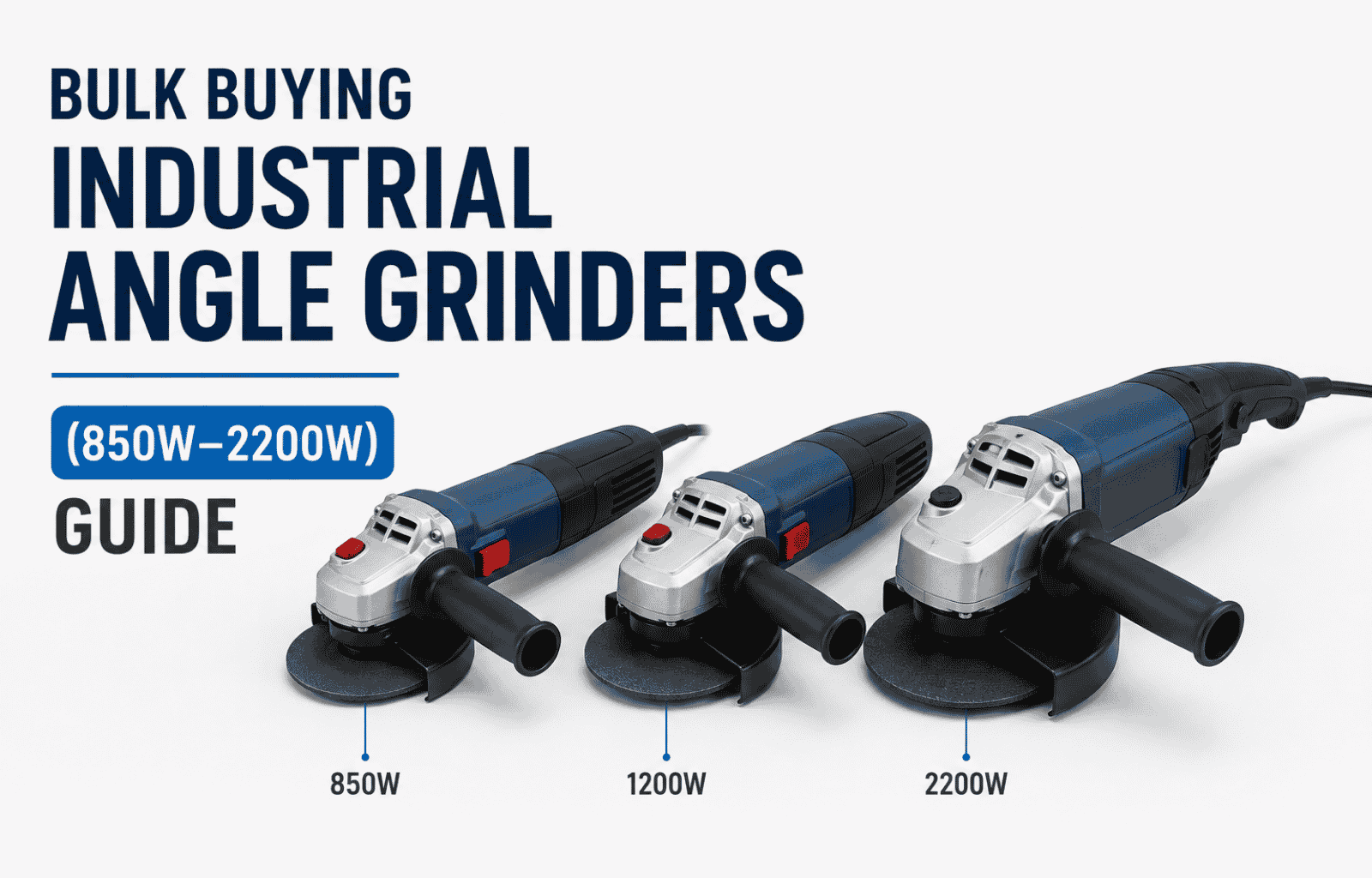
Bulk procurement of industrial angle grinders means buying multiple units at once to cut per-unit costs, keep spare tools ready, and match power ratings (850W for light work, 1200W for general fabrication, 2200W for heavy continuous use) to your jobs. Sourcing from a dedicated B2B supplier like DK Tooling gives you branded stock, volume discounts, and reliable local support.
Running a metal fabrication operation means your grinders never stop. They cut steel, clean welds, strip rust, and finish edges all day long. When you buy these tools one at a time, you pay more per unit and risk running short mid-project.
Bulk procurement fixes both problems. But a good bulk order takes more than clicking "buy" a dozen times. You need the right power rating for each job, tools built to last, and a supplier who stands behind the product.
Featured Products
This guide walks you through it all. You'll learn how to choose between 850W, 1200W, and 2200W models, what quality standards to check, how to source large orders, and how to work out your real cost per tool. Let's get into it.
Why does bulk procurement matter for metal fabrication?
Large fabrication jobs run on tight deadlines. One stalled task can hold up an entire phase. When you depend on tools bought piece by piece, you leave your workflow exposed.
Here's what smart bulk buying gives you:
- Lower cost per unit. Suppliers offer better rates on volume orders. Buy twenty grinders instead of two, and the price per machine drops. Over a full project, those savings add up fast.
- Tools ready for every worker. No one shares or waits. Each crew member gets a reliable machine from day one.
- Backup for breakdowns. Grinders take heavy use, so some will fail. A stock of spares means a swap in minutes, not days.
- Simpler maintenance. When every grinder is the same model, spare parts and discs fit every unit. Training gets easier too.
The metal fabrication sector is the biggest buyer of angle grinders worldwide. According to Global Market Insights (August 2026), metalworking and fabrication generated USD 1.16 billion in 2025, or 35.8% of global angle grinder revenue. That scale reflects the constant cutting, deburring, and finishing work these shops handle.
Pro tip: Count how many grinders each project phase needs, then add a few spares. This one step prevents most site shortages.
What power rating should you choose: 850W, 1200W, or 2200W?
Matching wattage to the job is the most important call you'll make. Too little power and the motor overheats. Too much and you overspend on tools that sit half-used.
Here's a simple breakdown by power class.
850W angle grinders: light to medium work
An 850W grinder handles everyday tasks well. Think light cutting, weld cleaning, deburring, and surface finishing. Most run a 100mm (4-inch) disc at around 11,000 RPM and weigh close to 1.7 kg, so operators can work for hours without fatigue.
Choose 850W if your team does frequent short jobs across many work areas. It's the most common workshop grinder for a reason.
The CUMI CAG 100-850W Premium Angle Grinder is a solid example. It runs an 850W motor at 11,000 RPM with thermal overload protection and a spindle lock, and it's built for continuous factory use.
1200W angle grinders: general fabrication
Step up to 1200W when your shop cuts thicker metal or runs grinders for longer stretches. This class bridges portable work and demanding fabrication. The extra power means less strain on the motor during repeat heavy tasks, which extends tool life.
Choose 1200W if your team handles general fabrication all day and needs a machine that won't bog down under load.
2200W angle grinders: heavy-duty continuous use
A 2200W grinder is built for the toughest jobs. Large-disc cutting, sustained metal removal, and continuous industrial operations all call for this power. These tools often run bigger discs (up to 180mm or more) and hold up under loads that would burn out a lighter machine.
Choose 2200W if your operation runs fixed workstations with non-stop cutting or works with heavy structural steel.
Quick guide:
- 850W → light cutting, weld cleaning, finishing
- 1200W → general fabrication, frequent daily use
- 2200W → heavy cutting, continuous industrial work
What quality standards should you check before buying in bulk?
A cheap grinder with a weak motor overheats, fails early, or causes accidents. On a bulk order, one bad model gets multiplied across your whole site. That's a costly mistake.
Check these things in every tool before you commit:
- Motor build and protection. Look for thermal overload protection to stop motor burn-outs during long shifts. Industrial-grade bearings and alloy gears keep power smooth and reduce vibration.
- Safety features. Every grinder should have a spindle lock, a guard that adjusts easily, and a lock-on/off switch. These protect your operators.
- Dust resistance. A good airflow design keeps masonry dust and metal debris out of the motor. This matters most in fabrication shops full of fine particles.
- Genuine warranty. Certified, branded products come with proper manufacturer warranties. Unbranded tools rarely offer any cover at all.
- Disc compatibility. Standard disc sizes make replacements easy to source later.
Buying genuine brands protects you here. DK Tooling supplies 100% authorised stock from names like Bosch, Makita, DeWalt, CUMI, and HiKOKI, each with full manufacturer warranties. If you want a wider primer first, read the guide on how to choose the best power tools in Noida for industrial work.
How do you source angle grinders in bulk the right way?
The trick is finding a supplier who can handle volume and stand behind the product. You have two broad routes: online marketplaces and dedicated B2B suppliers.
Marketplaces like IndiaMART or TradeIndia give you plenty of choice. Search either and you'll find over 100 grinder listings in the NCR alone, priced from around ₹850 to ₹4,170 per piece. The trade-off is that each listing is a separate seller, so quality, pricing, and after-sales support vary a lot. You have to vet each one yourself.
A dedicated supplier like DK Tooling works differently. One point of contact, branded stock, and consistent bulk pricing. Support is local and clear, which matters when a tool fails mid-shift.
Choose a marketplace if you're buying small quantities and want to compare many vendors. Choose a dedicated supplier if consistency, branded stock, and reliable support matter more.
Once you've picked a route, follow these steps for a smooth bulk order:
- Work out your exact numbers. Map your project timeline and count how many grinders each phase needs. Add spares for breakdowns.
- Match delivery to your schedule. Confirm dates so tools arrive before each phase starts. This avoids both shortages and site clutter.
- Negotiate on volume. Larger orders give you room to ask for a better rate. A dedicated supplier will usually work with you.
- Get the paperwork right. Ask for invoices, warranty cards, and product documents. These protect you if a tool fails and help with audits.
To browse ready stock, start with the DK Tooling angle grinder category or request a bulk quote directly.
How do you work out the true cost of a bulk order?
The sticker price is only part of the story. The real number is total cost of ownership, and it decides whether your order pays off.
Here's what shapes it:
- Purchase price. Volume discounts lower your per-unit cost. Wholesale rates at DK Tooling, for example, drop the CUMI 850W grinder to ₹2,300 per unit on bulk orders.
- Maintenance and spares. When all your grinders share one model, replacement parts and discs fit every unit. That cuts your parts inventory and simplifies repairs.
- Downtime cost. A reliable, heavy-duty grinder keeps working. Every hour a cheap tool spends broken is an hour your crew stands idle.
- Tool lifespan. Genuine branded machines with proper motor protection last longer under repeat use. Fewer replacements means lower spend over the project.
The truth is, the cheapest grinder rarely wins on total cost. A tool that fails in three months costs you far more than its low price ever saved.
Pro tip: Standardise on one or two models across your site. It slashes your spare-parts complexity and makes operator training faster.
How do you keep bulk-bought grinders running?
Buy dozens of grinders and you take on a maintenance job too. Left unchecked, small faults spread across your fleet and eat into productivity.
Keep them running with a simple routine:
- Set a preventive schedule. Clean vents, check brushes, and inspect discs on a regular cycle. This catches wear before it causes a failure.
- Keep spares on hand. Stock common discs, brushes, and guards so a fix takes minutes.
- Hold on to documentation. Warranty cards and product manuals speed up any claim or repair.
- Lean on your supplier. A good B2B partner offers technical support and quick access to replacement parts. DK Tooling backs bulk buyers with priority support and genuine spares.
When one model runs across your whole site, all of this gets simpler. Your team learns one machine well, which also lowers the risk of mistakes.
Frequently asked questions
What is the best wattage for an industrial angle grinder?
It depends on the job. Use 850W for light cutting, weld cleaning, and finishing. Use 1200W for general fabrication and frequent daily use. Use 2200W for heavy cutting and continuous industrial work. Most fabrication shops keep a mix, matching each tool to its task.
Are bulk angle grinders cheaper than buying one at a time?
Yes. Suppliers offer volume discounts, so the price per unit drops as your order grows. On a large job needing dozens of tools, these savings add up to a meaningful amount. Bulk buying also cuts your admin and delivery costs.
How many angle grinders should a fabrication facility buy in bulk?
Count how many your project needs at each phase, give every active worker one, then add a few spares for breakdowns. Mapping this against your timeline prevents both shortages and waste.
Which brands of angle grinders are best for metal fabrication?
Trusted contractor-grade brands include Bosch, Makita, DeWalt, CUMI, and HiKOKI. These machines are built for repeat use, with stronger motors and better housing than budget models. DK Tooling stocks these brands for bulk buyers with full warranties.
Is it better to buy from a marketplace or a dedicated supplier?
For small quantities and wide comparison, marketplaces like IndiaMART work well. For bulk orders where you need consistent quality, branded stock, and reliable local support, a dedicated supplier like DK Tooling is the safer choice.
What safety features should an industrial angle grinder have?
Look for a spindle lock, a lock-on/off switch, an easily adjustable guard, and motor overload protection. Always pair the tool with the correct disc and proper safety gear, including goggles, gloves, and a mask.
Getting your bulk order right
Bulk procurement of industrial angle grinders is a smart move for any fabrication operation. It lowers your cost per unit, keeps spare tools ready, and helps every worker stay productive. The key is matching the right power rating to each job and buying quality machines that last.
Do three things well, and your order will pay off:
- Match wattage to the work — 850W for light tasks, 1200W for general fabrication, 2200W for heavy continuous use.
- Check quality before you commit — motor protection, safety features, and genuine warranties.
- Pick the right supplier — one that offers branded stock, bulk pricing, and local support.
Ready to source your fleet? Browse the DK Tooling angle grinder range or request a bulk quote to get started.